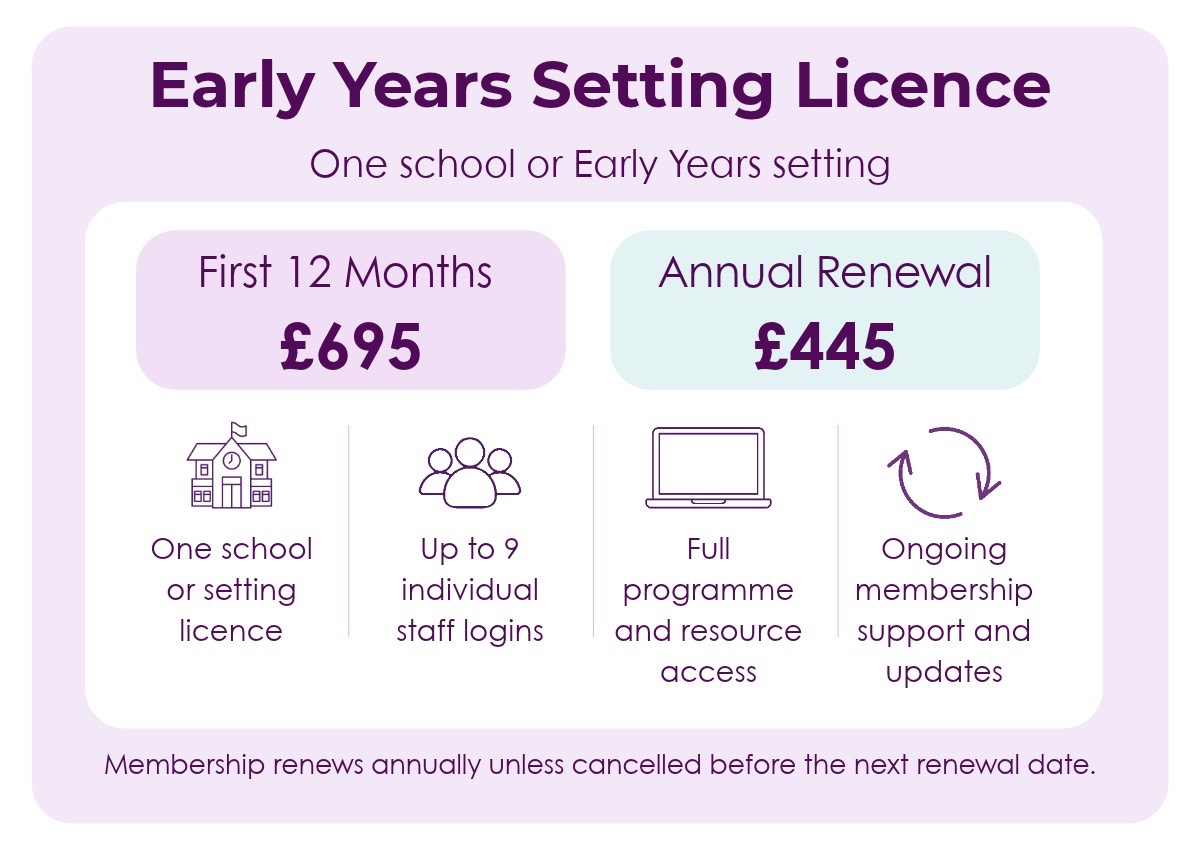

The Emotionally Regulated Classroom for Children®
A ready-to-teach children's programme with practical resources, alongside guidance to support the development of a whole-setting approach to emotional regulation and behaviour.
Everything is brought together in an online membership area, offering ongoing support and a community of educators learning and developing their practice together.
The programme is grounded in neuroscience and child development, drawing on attachment-aware and relational practice, with co-regulation at its heart.
It is carefully aligned with the Personal, Social and Emotional Development (PSED) area of the Early Years Foundation Stage (EYFS).
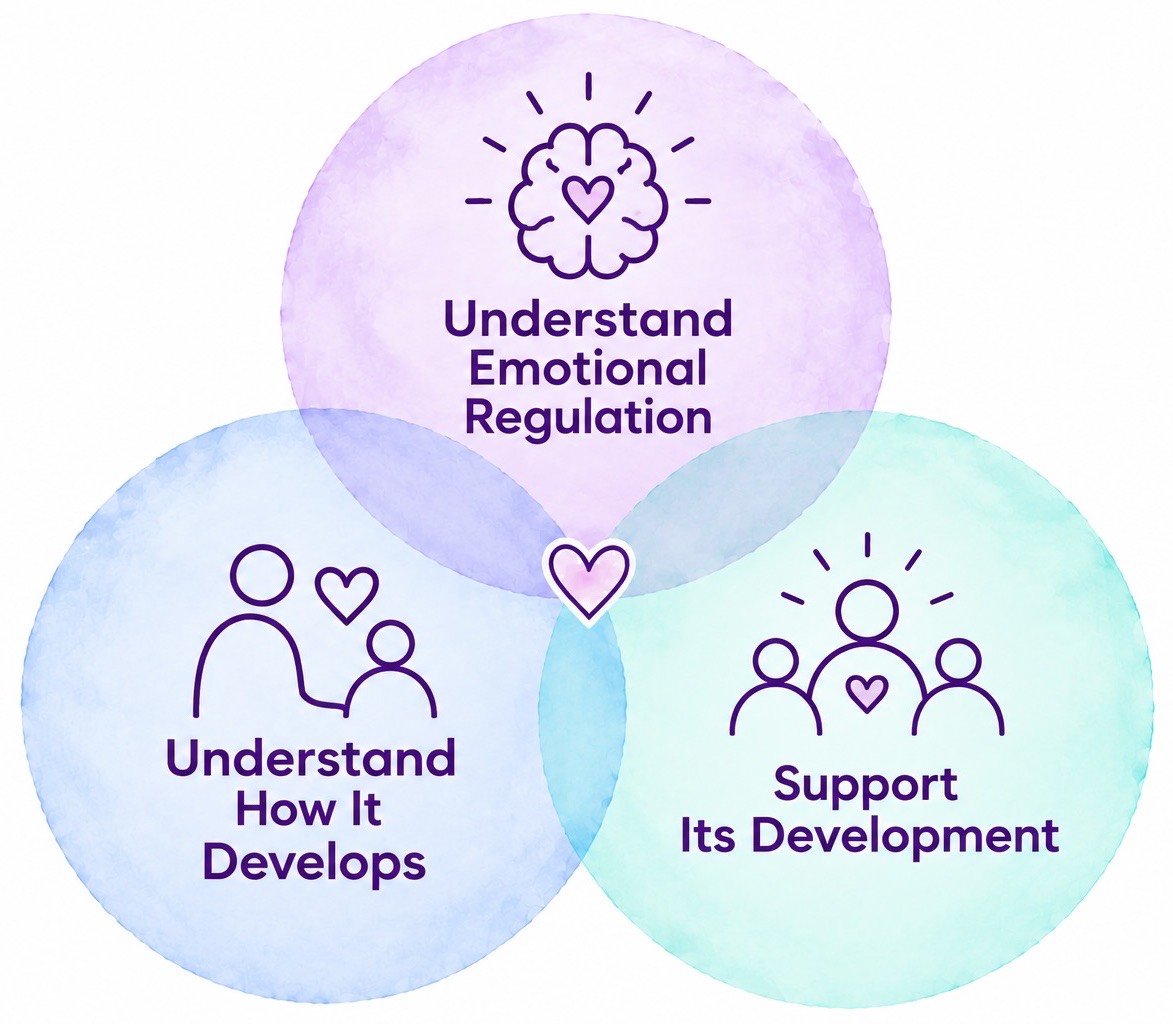
Three Elements
The Emotionally Regulated Classroom® for Children brings together three essential elements to support children and educators.

The Approach
Practical, neuroscience-informed guidance to help educators understand emotional regulation, behaviour and co-regulation and develop a shared approach across their setting.

The Children's Programme
Ready-to-teach lessons, engaging characters and practical resources that help children understand feelings, build relationships and develop problem-solving skills.

Community & Support
An online membership area bringing everything together, with access to resources, ongoing guidance and a community of educators sharing and developing their practice.

What's included in the programme?

01. The Handbook
The foundation of the programme, bringing together both practical guidance and the knowledge that underpins the approach.
Clear, step-by-step guidance on how to set up and use the approach within your setting. Alongside this, theory and insight that deepen your understanding of behaviour, emotional regulation and why this approach works.

02. Lesson Plans
These six structured sessions are designed to introduce the approach to children in a clear and accessible way.
They support children to begin understanding feelings, behaviour and the language of problem-solving before they are expected to use it in real situations.
The learning is designed to be revisited and built on over time, with activities and practical ideas that can become part of your ongoing classroom provision and everyday routines.

03. Teaching Slides
Ready-to-use slides that support you in delivering the lesson plans and introducing key concepts.
These visuals help children understand feelings, behaviour and the problem-solving process in a simple and engaging way.

04. Printable Resource Pack
A set of practical, classroom-ready resources designed to support children in using the approach throughout the day.
This includes visual prompts, problem-solving steps and materials to create an accessible and supportive classroom environment.

05. Community and Live Support
Access to the ERC Community, where you can ask questions, share experiences and connect with other settings using the programme.
You’ll also have access to monthly live Q&A sessions, with the opportunity to submit questions in advance.

06. Parent & Carer Support
Resources to help you share the programme approach with parents and carers, supporting greater consistency between the setting and home.
New resources and programme updates will also be added throughout your membership.

Benefits of the programme
01.
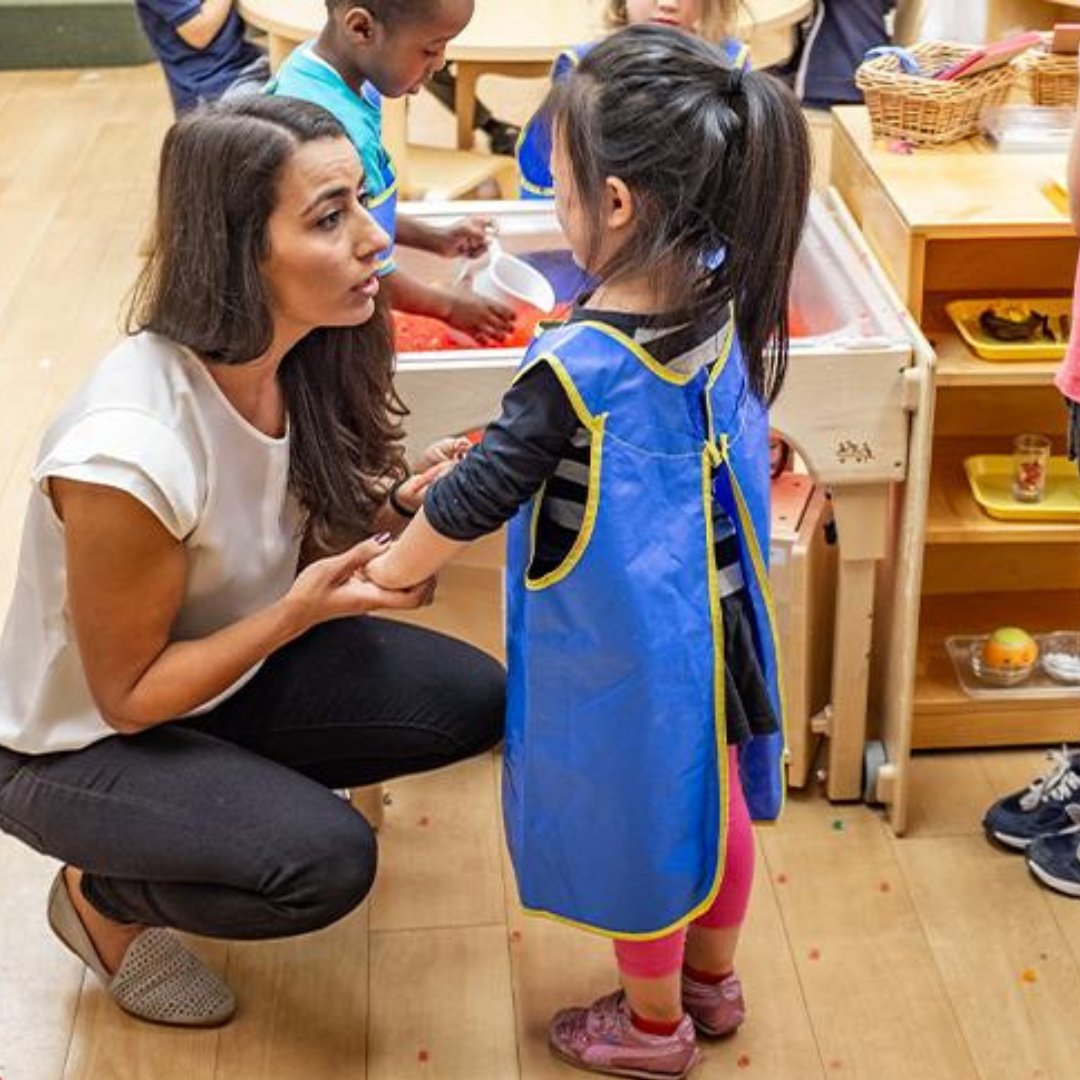
A clear and confident response
Staff feel confident in how to respond in the moment, using shared language and practical steps that support children rather than simply stopping behaviour.
Instead of reacting differently each time, adults are supported to respond in a way that is regulated, consistent and purposeful.

02.
Supports emotional regulation and communication
This approach supports the development of emotional regulation by ensuring children’s feelings are acknowledged by adults.
It also helps children to express those feelings in healthy ways, rather than acting them out through behaviour.
03.
Builds healthy relationships
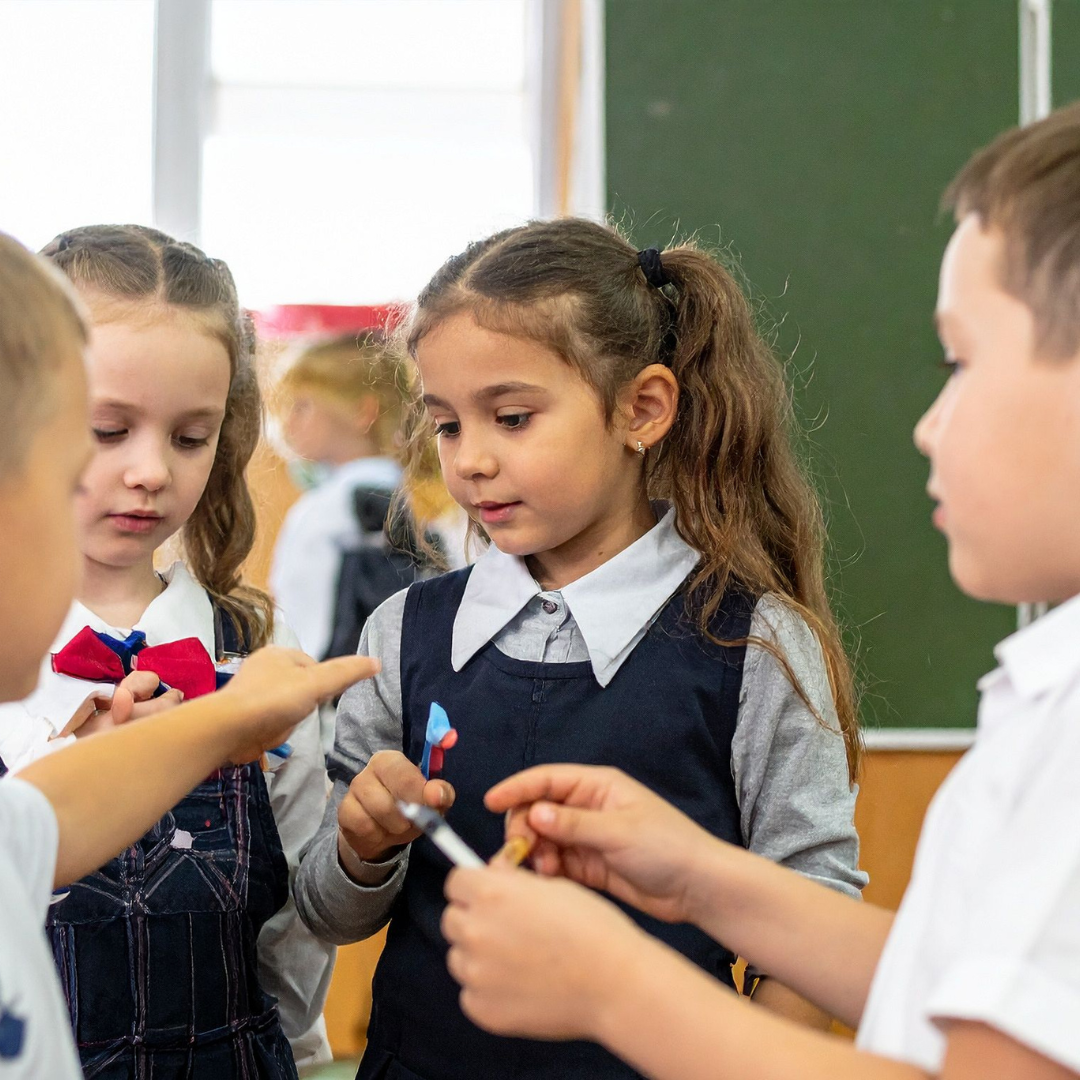
This relational approach is grounded in neuroscience and supports children to share their feelings and needs in a healthy way.
It builds the foundations for strong relationships both in the classroom and beyond.
Testimonials
Ava, Class Teacher
"This programme has enabled me to approach moments of conflict with confidence after always panicking in knowing what to say to resolve problems."
Tom, Class Teacher
"This is a great support for EYFS. Some great visuals and steps for supporting our youngest children with both their emotions and conflict resolution."
Catherine, EYFS Lead
"As EYFS lead, I’ve seen a significant impact across the unit from using this simple, clear and consistent approach. It empowers children to explore and understand their feelings, while developing the confidence to advocate for themselves when challenges arise."
About the Creator
Creative Director & Founder
This programme has been developed by Karen Kirkpatrick, Behaviour and Wellbeing Consultant and founder of Heartfelt Teaching and The Emotionally Regulated Classroom.
Karen has over 20 years’ experience working in primary schools as a teacher, SENCO and senior leader and now works alongside schools to develop relational, emotionally informed approaches to behaviour and wellbeing. Her work is grounded in neuroscience, attachment and trauma-informed practice.
She is a Therapeutic Wellbeing Practitioner with postgraduate training in education and therapeutic practice, alongside a number of specialist diplomas in wellbeing and therapeutic work with children and young people. Karen is Certified in Interpersonal Neurobiology (IPNB), trained through Dan Siegel and has completed professional training in Compassionate Inquiry with Gabor Maté.
Her work is rooted in real classroom practice and supports educators to understand behaviour, build connection and develop emotional regulation in everyday school life.